
ساعات العمل والعمل الإضافي من أكثر المواضيع التي يسأل عنها الموظف وصاحب العمل في المملكة. في هذا الدليل نشرح الأحكام كما وردت في نظام العمل السعودي ومنصّات وزارة الموارد البشرية والتنمية الاجتماعية، مع رقم المادة لكل حكم، ومثال محسوب لطريقة حساب الأوفر تايم.
الحد الأعلى لساعات العمل (المادة 98)
لا يجوز تشغيل العامل تشغيلًا فعليًا أكثر من ثماني ساعات في اليوم إذا اعتمد صاحب العمل المعيار اليومي، أو أكثر من ثمانٍ وأربعين ساعة في الأسبوع إذا اعتمد المعيار الأسبوعي. وتُخفّض ساعات العمل الفعلية في شهر رمضان للعمال المسلمين.
متى تزيد أو تنقص الساعات؟ (المادتان 99 و100)
لبعض فئات العمال أو في بعض الصناعات والأعمال التي لا يشتغل فيها العامل بصفة مستمرة.
لبعض فئات العمال أو في الصناعات والأعمال الخطرة أو الضارة.
وتُحدَّد هذه الفئات والأعمال بقرار من الوزير. أما المنشآت التي تتطلب طبيعة عملها نظام الورديات، فيجوز لها بموافقة الوزارة زيادة ساعات العمل، بشرط ألا يزيد متوسط ساعات العمل خلال ثلاثة أسابيع أو أقل على الحد النظامي (المادة 100).
فترات الراحة والصلاة والطعام (المواد 101 – 103)
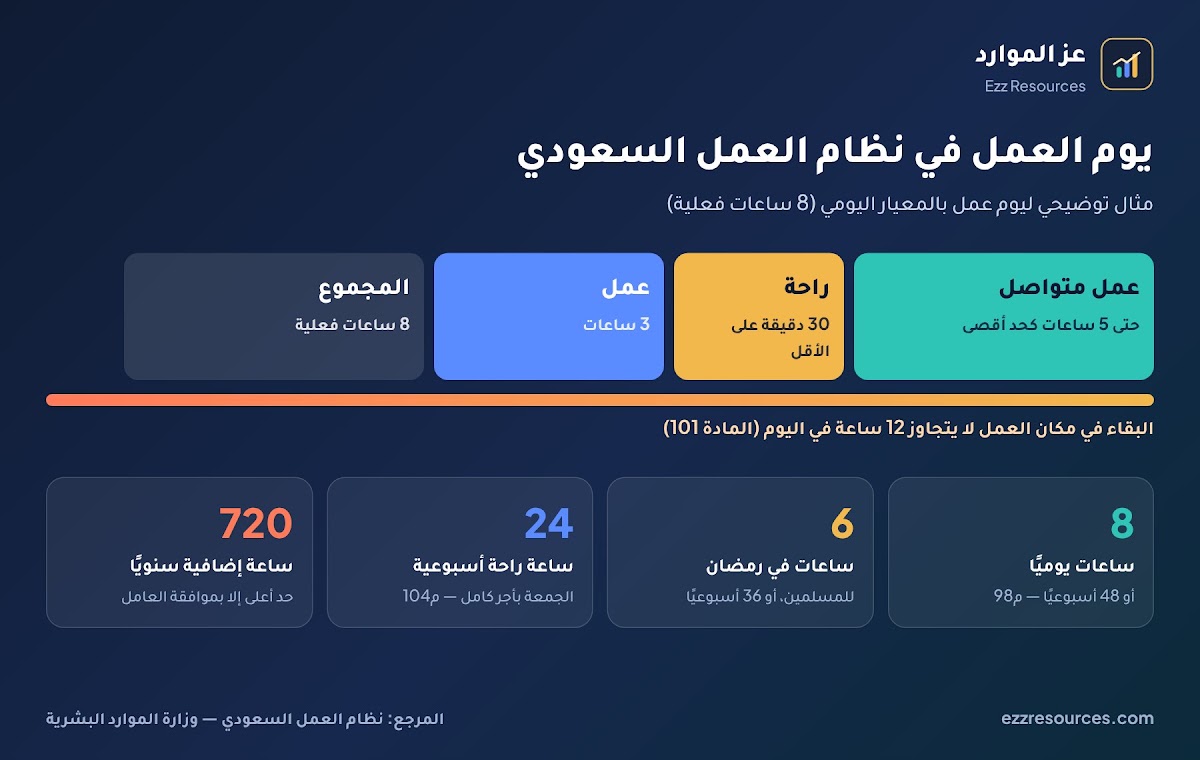
- لا يعمل العامل أكثر من خمس ساعات متتالية دون فترة للراحة والصلاة والطعام، ولا تقل فترة الراحة عن نصف ساعة في المرة الواحدة (المادة 101).
- لا يبقى العامل في مكان العمل أكثر من اثنتي عشرة ساعة في اليوم الواحد (المادة 101).
- فترات الراحة والصلاة والطعام لا تُحسب من ساعات العمل الفعلية، ولا يكون العامل خلالها تحت سلطة صاحب العمل، ولا يُلزم بالبقاء في مكان العمل (المادة 102).
- للوزير أن يحدد بقرار الحالات التي يلزم فيها العمل دون فترات راحة لأسباب فنية أو ظروف التشغيل، مع إلزام صاحب العمل بتمكين العامل من الصلاة والطعام والراحة (المادة 103).
الراحة الأسبوعية (المادتان 104 و105)
يوم الجمعة هو يوم الراحة الأسبوعية لجميع العمال، وهو بأجر كامل ولا تقل مدته عن 24 ساعة متتالية. ويجوز لصاحب العمل بعد إبلاغ مكتب العمل المختص أن يستبدل بهذا اليوم يومًا آخر لبعض عماله، مع تمكينهم من أداء واجباتهم الدينية. ولا يجوز تعويض يوم الراحة الأسبوعية بمقابل نقدي (المادة 104).
وفي الأماكن البعيدة عن العمران أو الأعمال التي تتطلب طبيعتها ذلك، يجوز تجميع الراحات الأسبوعية المستحقة عن مدة لا تتجاوز ثمانية أسابيع، باتفاق صاحب العمل والعمال وموافقة الوزارة (المادة 105).
الحالات الاستثنائية (المادة 106)
يجوز الخروج عن أحكام ساعات العمل والراحة في حالات محددة، منها: أعمال الجرد السنوي وإعداد الميزانية والتصفية وقفل الحسابات، ومنع وقوع حادث خطر أو إصلاح ما نشأ عنه، ومواجهة ضغط عمل غير عادي، والأعياد والمواسم التي يحددها الوزير بقرار.
ما هو العمل الإضافي؟ وكم أجره؟ (المادة 107)
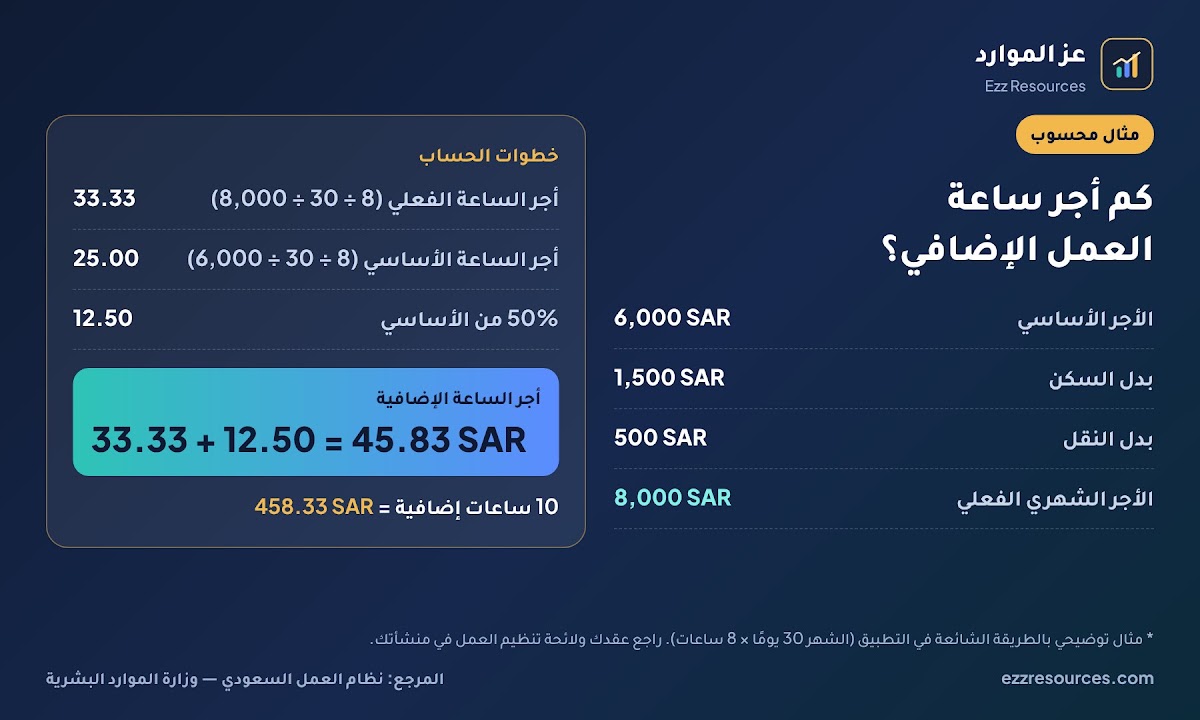
يلتزم صاحب العمل بأن يدفع للعامل عن ساعات العمل الإضافية أجرًا إضافيًا يوازي أجر الساعة مضافًا إليه 50% من أجره الأساسي. ويجوز بموافقة العامل أن تُحتسب له أيام إجازة تعويضية مدفوعة الأجر بدلًا من الأجر الإضافي، وفق ما تحدده اللائحة التنفيذية.
طريقة حساب الأوفر تايم بمثال
النظام حدد المعادلة: أجر الساعة + 50% من الأجر الأساسي للساعة. وفي التطبيق الشائع يُقسم الأجر الشهري على 30 يومًا ثم على 8 ساعات للوصول لأجر الساعة. والمثال التالي توضيحي:
الحد السنوي للعمل الإضافي: 720 ساعة
توضح وزارة الموارد البشرية أن ساعات العمل الإضافية لا تزيد على 720 ساعة في السنة، ويجوز تجاوز هذا الحد بموافقة العامل، وفقًا للمادة (22) من اللائحة التنفيذية لنظام العمل.
أخطاء شائعة يقع فيها الطرفان
- احتساب فترة الراحة ضمن ساعات العمل الفعلية.
- حساب الإضافي على الأجر الأساسي فقط دون أجر الساعة.
- تعويض يوم الراحة الأسبوعية بمبلغ نقدي.
- عدم توثيق الساعات الإضافية وموافقة العامل.
- العمل ساعات إضافية بدون تكليف أو اعتماد موثّق.
- عدم الاحتفاظ بنسخة من سجل الحضور والانصراف.
- عدم مراجعة طريقة احتساب الإضافي في العقد واللائحة.
- الخلط بين ساعات رمضان والساعات المعتادة.
أسئلة يبحث عنها الناس
❓ كم ساعات العمل في القطاع الخاص بالسعودية؟
❓ كم ساعات العمل في رمضان؟
❓ هل فترة الراحة محسوبة من الدوام؟
❓ كم نسبة أجر العمل الإضافي؟
❓ هل يجوز لصاحب العمل إلزامي بالعمل يوم الجمعة؟
- وزارة الموارد البشرية — ساعات العمل الفعلية
- وزارة الموارد البشرية — ساعات العمل الإضافية
- وزارة الموارد البشرية — نظام العمل: شروط العمل وظروفه (المواد 98–107)
- وزارة الموارد البشرية — الأحكام الخاصة بسلامة العمال ورعايتهم
- جريدة أم القرى — تعديل بعض مواد نظام العمل (السارية منذ فبراير 2025)

Working hours and overtime are among the most common questions employees and employers ask in Saudi Arabia. This guide explains the rules as set out in the Saudi Labor Law and on the Ministry of Human Resources and Social Development (HRSD) platforms, with the article number for each rule and a worked overtime example.
Maximum working hours (Article 98)
A worker may not actually work more than eight hours a day if the employer uses the daily standard, or more than forty-eight hours a week if the employer uses the weekly standard. Actual working hours are reduced during Ramadan for Muslim workers.
When can hours go up or down? (Articles 99 and 100)
For certain categories of workers, or in industries and jobs where the worker does not work continuously.
For certain categories of workers, or in hazardous or harmful industries and jobs.
These categories and jobs are set by ministerial decision. Establishments whose work requires shifts may, with the Ministry's approval, increase working hours, provided the average over three weeks or less does not exceed the legal limit (Article 100).
Breaks for rest, prayer and meals (Articles 101–103)

- A worker may not work more than five consecutive hours without a break for rest, prayer and meals, and each break must be at least half an hour (Article 101).
- A worker may not stay at the workplace for more than twelve hours in a single day (Article 101).
- Rest, prayer and meal breaks do not count as actual working hours. During them the worker is not under the employer's authority and is not required to stay at the workplace (Article 102).
- The Minister may specify by decision the cases where work must continue without breaks for technical or operational reasons, and the employer must still let the worker pray, eat and rest (Article 103).
Weekly rest (Articles 104 and 105)
Friday is the weekly rest day for all workers. It is fully paid and lasts at least 24 consecutive hours. After notifying the competent labor office, the employer may replace it with another day for some workers, while enabling them to perform their religious duties. The weekly rest day may not be replaced with cash (Article 104).
In places far from urban areas, or where the nature of the work requires it, weekly rest days due for a period of up to eight weeks may be grouped together, by agreement between the employer and the workers and with the Ministry's approval (Article 105).
Exceptional cases (Article 106)
The working-hours and rest rules may be set aside in specific cases, including: annual stock-taking, preparing the budget, liquidation and closing the accounts; preventing a serious accident or repairing its damage; handling an unusual workload; and holidays and seasons specified by ministerial decision.
What is overtime, and how is it paid? (Article 107)
The employer must pay the worker for overtime hours an additional wage equal to the hourly wage plus 50% of the basic wage. With the worker's consent, the worker may instead be given paid compensatory leave days in place of the overtime pay, as set by the Implementing Regulations.
How to calculate overtime: a worked example
The law sets the formula: hourly wage + 50% of the basic hourly wage. In common practice, the monthly wage is divided by 30 days and then by 8 hours to get the hourly rate. The example below is illustrative:

The annual overtime cap: 720 hours
HRSD states that overtime hours may not exceed 720 hours a year, and this cap may be exceeded with the worker's consent, under Article 22 of the Implementing Regulations of the Labor Law.
Common mistakes on both sides
- Counting break time as actual working hours.
- Calculating overtime on the basic wage only, without the hourly wage.
- Replacing the weekly rest day with cash.
- Not documenting overtime hours and the worker's consent.
- Working overtime without a documented assignment or approval.
- Not keeping a copy of the attendance record.
- Not checking how overtime is calculated in the contract and work regulations.
- Confusing Ramadan hours with regular hours.
Frequently asked questions
❓ What are private-sector working hours in Saudi Arabia?
❓ What are working hours in Ramadan?
❓ Does the break count as working time?
❓ What is the overtime rate?
❓ Can my employer make me work on Friday?
- HRSD — Actual working hours
- HRSD — Overtime hours
- HRSD — Labor Law: working conditions (Articles 98–107)
- HRSD — Provisions on worker safety and welfare
- Umm Al-Qura Gazette — Amendments to the Labor Law (in force since February 2025)
التعليقاتComments (0)